The handbook was prepared by researcher Anja Striberny at Nofima, in collaboration with former colleagues Lene Sveen and Kevin T. Stiller. It is the result of a project in Innlandet county, where the county municipality has collaborated with the company Klosser Innovasjon, the Research Council of Norway, NMBU, the University of Innlandet and Nofima. The goal has been to create a knowledge base for the realisation of farming ventures in the region.
Arctic char (Salvelinus alpinus) is a robust cold-water species that tolerates high density, making it well suited for land-based farming. The handbook summarises existing knowledge about the species' biological needs, technology selection and environmental strategies to achieve sustainable and profitable production. Researcher Striberny emphasises that aquaculture is a knowledge-intensive field, and that a guide can give interested parties a faster introduction to what is required to succeed.
Karina Hauge Johansen at Klosser Innovasjon, who is responsible for the breeding programme 'Arctic Red', says that planning aquaculture facilities is highly competence-intensive. They have received many questions from interested parties and consultants about how facilities should be designed and adapted to freshwater watercourses. The handbook is intended to provide answers to the technological requirements for operating food fish farming efficiently and in an environmentally sound manner.
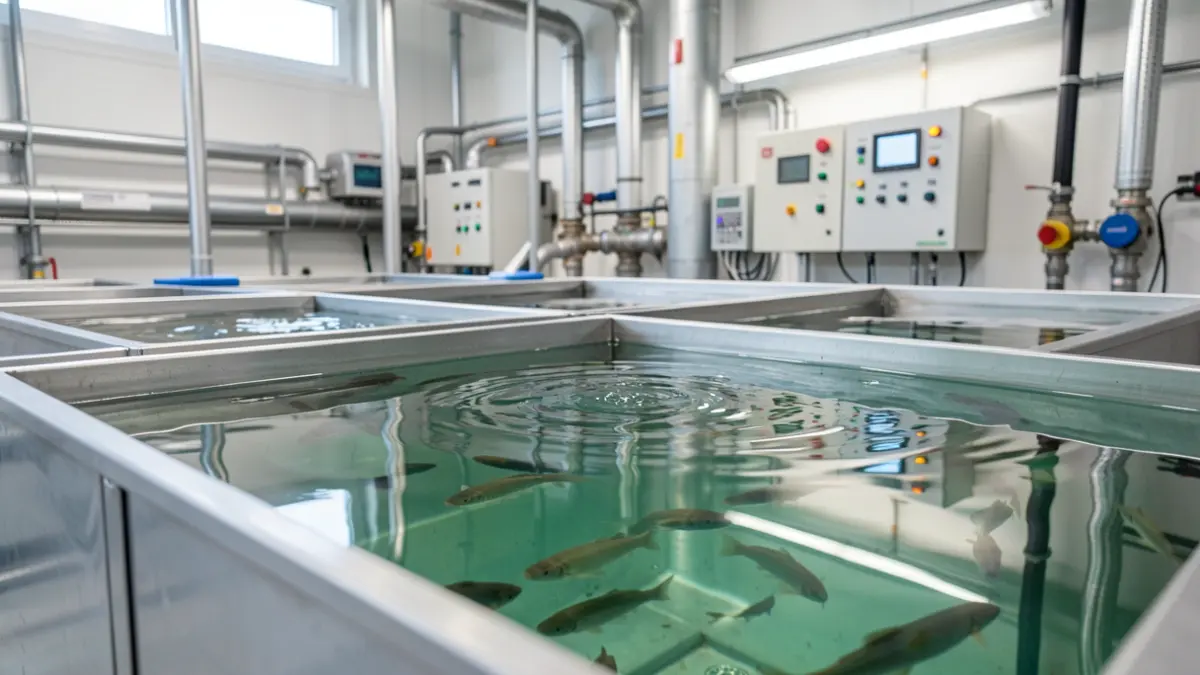
Modern farming technologies include flow-through systems, reuse systems and recirculating aquaculture systems (RAS). The choice of system has great significance for fish welfare, growth and sustainability. Flow-through systems are simple and inexpensive, but require large amounts of clean water. RAS provides precise control over water quality and minimises water consumption, but requires high investment and technical competence. Striberny points out that different methods require different technology, competence and degree of investment.
Despite technological advances, researchers point to economic limitations. High investment costs and operating expenses in RAS facilities pose significant challenges for the industry. Future climate changes may also affect production, as char is a cold-water species with narrow tolerance limits. Increased temperatures and variable water quality can affect both production efficiency and energy requirements. Striberny notes that there is significant untapped potential in the development of improved egg production protocols.
The report is a knowledge summary based on scientific studies, textbooks and reports on char biology, farming technology, fish health and environmental impact. Public production statistics and experiences from professionals supplement the research. The handbook aims to strengthen local food security and make Norwegian food production less vulnerable by investing in multiple species.